You're already in the fight if one parent says, “I never got served, so I don't owe anything,” and the other says, “You walked away years ago, and now I need help with every month you missed.” In Texas, those are not the same case. One is about retroactive child support, the other is about back child support, or arrears, and the courtroom math changes depending on which claim is on the table.
That distinction matters because Texas courts do not treat every unpaid child support problem the same way. A parent with no prior order may face a retroactive support claim under Texas Family Code §154.009, while a parent who was already ordered to pay and stopped is dealing with enforcement, arrears, and the remedies that follow under Chapter 157 and the support guidelines in Chapter 154. If you use the wrong label, you can argue the wrong defenses, ask for the wrong relief, and miss the evidence that wins these cases.
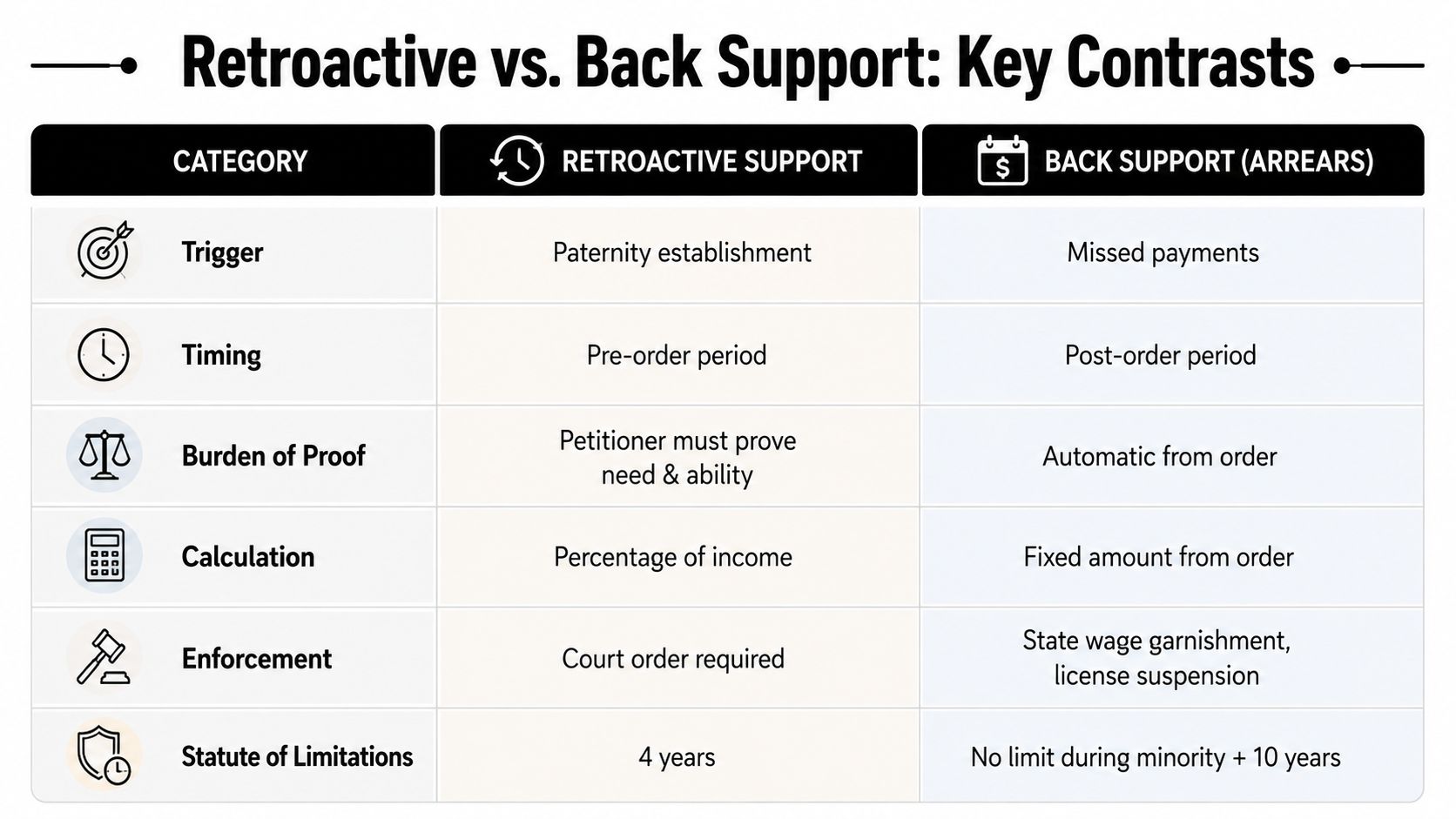
| Issue | Retroactive Child Support | Back Child Support, or Arrears |
|---|---|---|
| Timing | Before any order existed | After an order already existed |
| Legal focus | Historical support for a pre-order period | Unpaid amounts under an existing order |
| Core fight | Whether support should be ordered at all, and how far back | Whether the ordered support was paid, modified, or enforced |
| Math | Reconstructed historical guideline support | The ordered amount, credits, and enforcement issues |
| Main defenses | Paternity knowledge, undue hardship, actual support | Payment credits, modification, enforcement limits |
| Practical result | A new money judgment for the past | Collection of an existing debt |
Why the Distinction Between Retroactive and Back Child Support Matters in Texas
A mother comes in after a five-year relationship, never having filed for support. The father says he didn't know he was the child's legal parent. A different father walks in with a wage-withholding order from years ago and admits he stopped paying after losing his job. Those are both child-support disputes, but they are not the same dispute.
Texas treats retroactive support and arrears as separate remedies. Retroactive support reaches a period before any order was entered, while arrears are unpaid amounts under an existing order. Texas law also carries a four-year presumption for retroactive support, which is why courts usually start by looking at the four years before the petition was filed. The distinction is foundational because it shapes the burden of proof, the defenses available, and the amount the judge may award. See the statutory limitation discussion in Texas child support statute of limitations.
Why the label controls the case
If the claim is retroactive, the court is deciding whether to impose support for a time when no order existed. If the claim is arrears, the court is deciding how to collect on a debt that already exists. Those are different fights, and the evidence is different too.
Practical rule: If there was no prior order, start with §154.009. If there was already an order, start with Chapter 157 and the enforcement record.
That's why choosing the wrong label can be expensive. A parent seeking retroactive support can leave money on the table by arguing only like an enforcement lawyer. A parent defending arrears can overplay retroactivity arguments that the court won't use because the order already existed.
Defining Each Remedy Under the Texas Family Code
Texas Family Code §154.009 controls retroactive child support. It applies when no prior support order existed and the parent was not already a party to a suit in which support had been ordered. In that setting, the court uses the Chapter 154 guidelines to reconstruct what support should have been paid during the earlier months. A detailed guide to retroactive child support in Texas explains how courts approach that remedy in more depth. The question is not whether a monthly payment was missed. The question is whether the court should create a support obligation for the period before any order existed.
By contrast, back child support, or arrears, arises after a support order already exists and the obligor fails to pay what the order required. That remedy belongs to enforcement, collection, contempt, and judgment confirmation under Chapter 157, with guideline concepts still relevant when a court reviews modification requests or credits for payments made outside the order. The legal labels are not interchangeable, and Texas judges separate them quickly.
The practical distinction is straightforward. Retroactive support is a pre-order remedy. Arrears are a post-order enforcement problem. If the case began with no order, the petition usually belongs in a parentage or SAPCR case. If the order already exists, the dispute usually belongs in an enforcement action.
For a plain-language explanation of guideline math, How Child Support Is Calculated in Texas follows the way courts use net resources to reach the monthly number. That matters because retroactive support is not a flat debt pulled out of thin air. It is supposed to reflect what guideline support would have been during the earlier period, based on the parent's resources at the time.
Who can ask for it
The obligee, the obligor, and, in some situations, the child's interests can be involved in the request. In practice, the parent seeking retroactive support carries the burden of putting the historical facts together. That usually means old pay stubs, tax returns, messages about support, proof of actual payments, and anything else that helps the court reconstruct the missed months.
Arrears work differently. The existing order already supplies the amount, so the fight shifts to payment records, credits, offsets, and enforcement. In a courtroom, that difference changes the proof, the arguments, and the likely outcome.
Side by Side Comparison of Timing, Trigger, and Burden
A parent who is trying to sort out support disputes usually has to answer one basic question first. Did the unpaid support arise before any order existed, or did it happen after a court order was already in place? If the problem started before an order, the claim is for retroactive support. If the order already existed and payments stopped or came up short, the issue is arrears, and a guide to back child support and arrears in Texas explains that enforcement side in more detail.
| Criterion | Retroactive Child Support | Back Child Support, or Arrears |
|---|---|---|
| Period covered | Pre-order months | Post-order missed payments |
| Trigger | No prior support order | Existing order not followed |
| Governing statute | §154.009 | Chapter 157, with support terms from the original order |
| Burden of proof | Petitioner must justify retroactive award | Obligee proves nonpayment, then enforcement proceeds |
| Calculation method | Historical guideline support based on reconstructed net resources | The ordered amount, plus credits or enforcement amounts |
| Main defenses | Knowledge, notice, hardship, actual support | Payment records, modification, limited enforcement defenses |
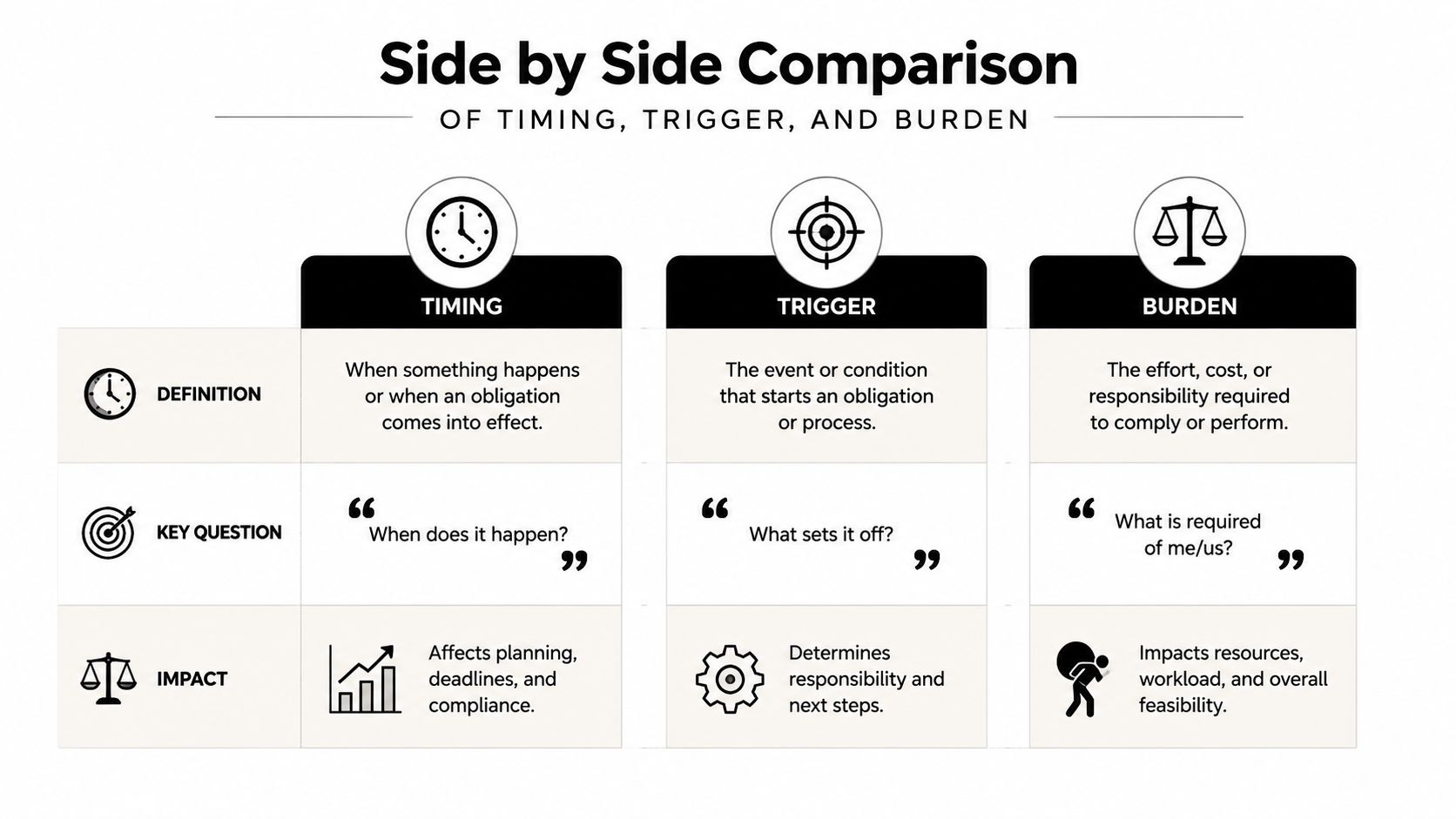
The burden is what changes the case. Retroactive support asks the court to rebuild a prior period from old pay records, tax returns, and proof of what the parent knew or paid at the time. Arrears start with an existing order, so the dispute usually turns on whether the obligor paid what the order required, whether credits apply, and whether any enforcement defense is available.
Texas also applies a guideline cap in child-support calculations, and the cap effective September 1, 2025 is $11,700 in net monthly resources. That matters most in a retroactive case, because the court may need to reconstruct guideline support month by month or year by year. In an arrears case, the court usually begins with the signed order and the payment history, not a new support estimate.
Why the same facts can lead to different outcomes
A father who paid cash, bought clothes, or covered rent may have a real defense in a retroactive case if he can prove those payments and tie them to support. The same facts can carry less weight in a back child support case if there was already a written order stating exactly what had to be paid and when. The legal question changes before the judge ever gets to the evidence.
That difference matters most in day-to-day co-parenting disputes, where support is often informal, undocumented, and later contested. A parent may believe those payments should count, but a court will treat them differently depending on whether the claim is for retroactive support or arrears. The statutory remedy controls the proof, the burden, and the room the judge has to adjust the result.
The first job is classification. Once the judge decides whether this is retroactive support or arrears, half the legal fight is already narrowed.
How Texas Courts Calculate Each Type of Support
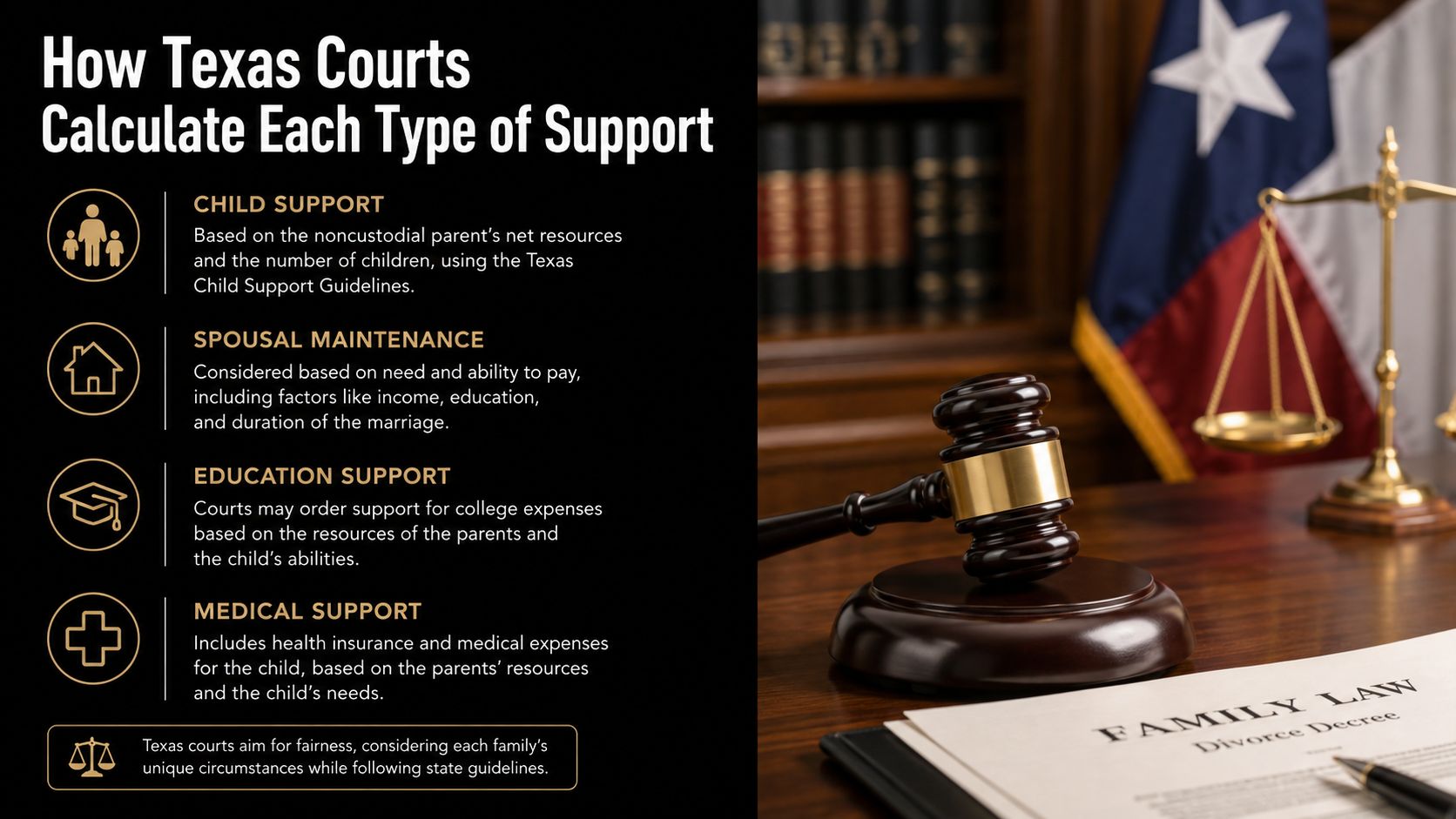
For retroactive child support, the court has to rebuild the earlier income picture. That means looking at the obligor's net resources during the relevant period, not just current pay. In a real case, that usually means tax returns, W-2s, pay stubs, profit-and-loss records, and bank deposits for the months in question.
Texas Family Code §154.009 directs the court to use the Chapter 154 guideline framework when calculating retroactive support. The practical math is usually monthly. If the obligor had different income levels over the four-year window, the court may need to reconstruct multiple snapshots rather than apply one static number. For high-income or disputed-income cases, the cap and any deviation under §154.123 become important.
For example, if one parent's net resources were steady, the court can apply the guideline percentage month by month and then total the result for the retroactive period. If the parent's income varied, the court may need year-by-year or even month-by-month analysis. That's why the evidence file matters more than general arguments about fairness.
For arrears, the calculation is simpler. The court starts with the existing order, checks what was paid, and calculates the unpaid balance. From there, the fight often shifts to credits, enforcement, or whether a modification should have been filed earlier under the standards in §154.123. Arrears cases are not usually about rebuilding the past from scratch. They're about whether the order was obeyed.
Texas collected more than $4.8 billion in child support during fiscal year 2020, and a 2025 Senate bill analysis cited in a Texas child-support statistics summary estimated that parents owed about $19 billion in unpaid child support statewide, which shows how large the enforcement side really is. The Texas Attorney General's Child Support Division has also reported that over 80% of collections in enforced cases are made through wage withholding. Those numbers explain why the math and the enforcement mechanism matter so much in practice. See the statewide context in Texas child support statistics.
A courtroom example
Suppose a parent had income in several different jobs over the past four years, then became self-employed. In a retroactive case, the judge may ask for the old W-2s, the business records, and proof of deposits to rebuild the monthly support amount under the guideline structure. In an arrears case, the judge usually asks a much narrower question, did the ordered payment get made?
Procedural Steps From Filing to Final Order
Retroactive support often starts inside a parentage suit or original SAPCR, because the court has to establish the legal relationship and decide support at the same time. Arrears usually start with a Motion to Enforce or, if the underlying order needs updating, a Motion to Modify under Chapter 157 and the support modification framework. Service of process comes first, and it matters because the other side has to know exactly what is being asked of the court.
After service, the work is financial discovery. That's where tax returns, pay stubs, business records, bank statements, and text messages about payments come into play. In retroactive cases, discovery is aimed at the historical period. In arrears cases, discovery focuses on payment proof, credits, and whether an earlier modification request should have been filed.
The hearing sequence usually includes temporary orders, associate judge proceedings in many counties, and then a final hearing or contested trial. The judge may hear live testimony about paternity knowledge, informal support, employment history, or why payments stopped. If contempt is on the table, the court also has to deal with enforcement standards and whether the evidence is specific enough to support a finding.
How the four-year presumption works in court
The four-year presumption in §154.009 is not just a slogan. It is a rebuttal framework. The court presumes that limiting retroactive support to the four years before the petition was filed is reasonable and in the child's best interest, but the other side can try to rebut that with evidence showing knowledge, avoidance, or stronger equitable facts. The judge still has to look at the evidence in front of the court.
Bring records early. In contested family court, the parent with organized proof usually has the better hearing, even when the law is not formally on that side yet.
Defenses Courts Actually Consider in Texas
Texas courts do not decide retroactive support by sympathy alone. They look at whether the obligor knew or should have known about paternity, whether the other parent tried to notify the obligor, whether the obligor provided actual support, and whether a retroactive award would create undue hardship. Those factors are written into the statute, and judges use them because they help separate a fair retroactive award from a punitive one.
Informal support matters more than many people expect, but only if you can prove it. Cash, diapers, rent, school supplies, utility payments, and direct transfers can all help if the records are there. A text thread, a bank transfer note, or a receipt can do more for a case than a vague memory ever will. In a co-parenting situation where support was fragmented and never documented, that proof can decide whether the court credits the parent or treats the help as unsupported assertion.
Undocumented help is still help, but it's hard to credit in court.
For arrears, the defenses are narrower. A parent may argue that the original order should have been modified, that payments were made, or that the accounting is wrong. Claims based on involuntary unemployment or partial payments need records, not just explanations. A judge in a modification setting will care about changed circumstances, but a judge enforcing arrears will usually start with the order that already exists.
The Texas retroactive-support statute, as summarized in Texas legal materials, also directs judges to weigh net resources, paternity notice, paternity knowledge, undue hardship, and actual support before suit. Those are the facts that matter when a parent says, “I helped, just not through the court.” See the statutory-factor summary in Texas retroactive child support factors.
What usually fails
What usually fails is the broad fairness argument with no records. “I paid when I could” is not enough by itself. “We were both helping” is not enough by itself. If you want credit, you need proof that a judge can verify.
Enforcement Tools for Collecting Back Child Support
Once arrears exist, Texas has a serious enforcement toolbox. Wage withholding is the workhorse. The Texas Attorney General's Child Support Division has reported that over 80% of collections in enforced cases are made through wage withholding, which is why income withholding is the first place many collection efforts begin. That is not a theory, it's the mechanism that moves money.
The court can also use contempt, license suspension, tax intercepts, passport-related remedies, and liens. If the obligor works for a wage employer, withholding is often the cleanest route. If the obligor is self-employed or hides income through a closely held business, the enforcement fight gets more technical and more document-heavy.
What happens when the obligor moves or hides money
If the obligor leaves Texas, interstate enforcement can still happen through UIFSA. If the obligor files bankruptcy, child support arrears are still a major issue and do not disappear just because a debt restructuring is attempted. If the obligor is paid through a business or irregular deposits, the obligee often needs subpoenas and forensic accounting to trace the money.
The scale of arrears in Texas is huge, which is why the collection system is built for persistence. The statewide unpaid-support burden is large, and enforcement usually depends on steady, repeated collection tools rather than one dramatic hearing. A back-support judgment only helps if the obligee can collect on it.
Action Plans for Custodial and Noncustodial Parents
If you are the custodial parent, start by separating retroactive support from arrears enforcement. If no order was ever entered, gather paternity proof, messages about support, old income records, and any proof of what the other parent provided, or failed to provide. If an order already exists, pull the payment history first, then decide whether the case calls for enforcement, contempt, or a request tied to a change in circumstances.
Settlement can make sense in retroactive cases when both sides have real exposure. A fixed number can cap risk and avoid a trial over reconstructed income, especially when the records are thin or disputed. Before agreeing to any number, test the support math under Chapter 154 and the deviation rules in §154.123, because the first proposal is rarely the fair one.
If you are the noncustodial parent, your sequence should be different. Confirm when paternity was established, audit the historical income reconstruction, gather proof of any informal support, and be ready to argue hardship or deviation if the guideline figure does not fit the facts. If the case involves arrears, focus on the order, the payment record, and whether a modification should have been filed when circumstances changed.
A lawyer can usually tell you quickly whether you are dealing with a retroactive-support claim, an arrears case, or both, and that label changes the courtroom approach. Bring three years of tax returns, pay stubs, bank statements, and every payment record you have, even if the file is incomplete. In a real hearing, the paper trail matters more than the story either parent tells.
Texas Child Support Law Office of Bryan Fagan handles child support establishment, modification, enforcement, and retroactive support disputes across Texas, including cases involving guideline calculations, wage withholding, and income disputes. If you need help sorting out what the court is likely to do with your facts, visit Texas Child Support Law Office of Bryan Fagan and get the numbers, records, and strategy lined up before your hearing.
If you need a clear plan for retroactive support, arrears, or a contested child support calculation in Texas, the Texas Child Support Law Office of Bryan Fagan can help you organize the evidence and build the case around the right remedy.